Introduction
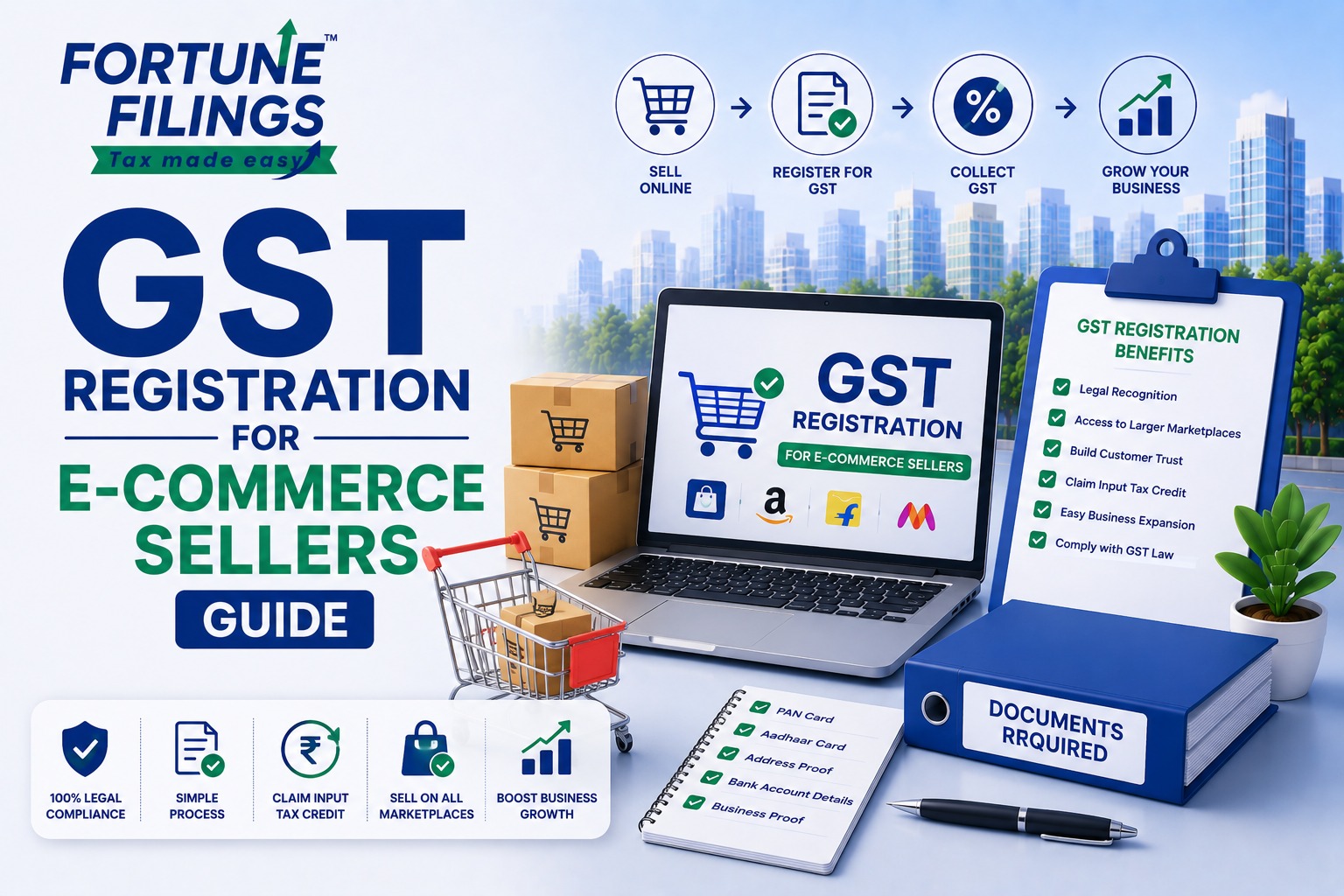
Understanding GST Registration for E-commerce Sellers is essential for businesses selling products online through marketplaces or digital platforms. Whether you sell on platforms like Amazon, Flipkart, Meesho, or operate your own online store, GST registration helps maintain legal compliance, improve business credibility, and support long-term business growth.
Many sellers assume GST becomes necessary only after crossing turnover limits. However, for marketplace sellers, GST registration is generally mandatory from the beginning, regardless of turnover, due to specific GST provisions for e-commerce operators. Online sellers commonly require a GSTIN to list products, receive payments, and maintain platform compliance.
Businesses planning GST registration in Chennai often register early to avoid listing issues, payment delays, and compliance-related complications while scaling online sales.
Are You Selling Online Without GST Registration?
Many online sellers face issues such as:
- Seller account approval problems
- Marketplace listing restrictions
- GST compliance confusion
- Difficulty issuing invoices
- Tax filing uncertainty
- Delayed platform onboarding
Proper GST registration helps online sellers operate smoothly and professionally.
Quick Summary – GST Registration for E-commerce Sellers
- GST is generally mandatory for marketplace sellers
- Helps sell on Amazon, Flipkart & Meesho
- Enables GST invoicing and compliance
- Improves business credibility
- Supports Input Tax Credit (ITC) benefits
- Helps scale online business legally
What is GST Registration for E-commerce Sellers?
GST registration is the process of registering an online business under the Goods and Services Tax system.
After approval, sellers receive a GSTIN (Goods and Services Tax Identification Number) that helps them:
- Sell products legally online
- Issue GST invoices
- Collect and remit GST
- File GST returns
- Claim eligible Input Tax Credit (ITC)
Marketplace sellers often require GST registration before product listing approval.
Is GST Mandatory for E-commerce Sellers?
This is one of the most common questions among online sellers.
1. Marketplace Sellers (Amazon, Flipkart, Meesho)
If you sell through e-commerce operators such as:
- Amazon
- Flipkart
- Meesho
- Myntra
GST registration is commonly mandatory regardless of turnover because sellers supplying through e-commerce operators fall under special GST registration requirements.
2. Selling Through Your Own Website
If you operate an independent D2C website, GST registration requirements may depend on:
- Turnover threshold
- Nature of supply
- Interstate sales
- GST applicability rules
Threshold exemptions may still apply in certain cases.
3. Interstate Selling
Many online businesses sell products across India.
GST requirements may become relevant depending on supply structure and selling channel. Marketplace sellers often register from the start to avoid compliance risks.
Why Online Sellers Register GST Early?
Many businesses voluntarily complete GST Registration for E-commerce Sellers early because it helps:
- Launch faster on marketplaces
- Improve business credibility
- Enable GST invoicing
- Claim Input Tax Credit (ITC)
- Avoid compliance interruptions
Online sellers frequently report that marketplaces expect GST details during onboarding. Community discussions also commonly mention GST registration as necessary for marketplace selling.
Benefits of GST Registration for E-commerce Sellers
1. Sell on Major Online Marketplaces
GST registration enables sellers to operate on:
- Amazon
- Flipkart
- Meesho
- Myntra
Without GST, marketplace onboarding may become difficult or unavailable.
2. Input Tax Credit (ITC)
Registered sellers may claim GST paid on eligible business purchases.
Examples include:
- Packaging materials
- Shipping-related expenses
- Inventory purchases
- Software subscriptions
ITC helps reduce overall tax burden and improves operational efficiency.
3. Better Business Credibility
GST registration helps online businesses appear:
- More professional
- More trustworthy
- More compliant
This improves vendor trust and marketplace confidence.
4. Easier Tax Compliance
GST registration helps sellers maintain:
- Tax invoices
- GST filing records
- Sales documentation
- Compliance reporting
Proper compliance reduces penalties and filing confusion.
5. Nationwide Business Expansion
E-commerce sellers often serve customers across India.
GST registration helps support:
- Interstate selling
- Marketplace growth
- Scalable business expansion
This improves long-term business growth opportunities.
GST Registration Process for E-commerce Sellers
The GST Registration Process in India generally includes:
- Prepare required documents
- Submit online GST application
- Complete Aadhaar verification
- Upload address and business proof
- Select business activity details
- Receive GSTIN after approval
Proper documentation reduces approval delays.
Documents Required for GST Registration
Generally required documents include:
- PAN Card
- Aadhaar Card
- Passport-size photograph
- Business address proof
- Bank account details
- Mobile number & email ID
- Rental agreement (if applicable)
Preparing Documents Required for GST Registration early helps speed up processing.
GST Registration for E-commerce Sellers vs Regular Businesses
|
Feature |
E-commerce Seller |
Regular Business |
|
GST Requirement |
Often mandatory for marketplace sellers |
Threshold-based |
|
Interstate Selling |
Common |
Depends |
|
Platform Compliance |
Required |
Not applicable |
|
GSTIN Need |
High |
Depends on turnover |
|
Marketplace Selling |
Yes |
No |
This comparison helps sellers understand why GST registration becomes important for online businesses.
Why E-commerce Sellers in Chennai Register GST?
Businesses planning GST registration in Chennai commonly register because it helps:
- Start online selling faster
- Meet marketplace requirements
- Improve tax compliance
- Build professional credibility
- Expand business nationwide
Online sellers often prefer structured GST compliance to support long-term growth.
Conclusion
Understanding GST Registration for E-commerce Sellers helps online businesses maintain legal compliance, improve marketplace access, and support scalable business growth. From platform onboarding and GST invoicing to Input Tax Credit benefits and nationwide selling opportunities, GST registration plays an important role in online business operations.
Businesses planning GST registration in Chennai commonly register early to simplify marketplace selling, improve compliance, and operate confidently in the growing e-commerce industry. Proper planning and documentation help online sellers complete registration smoothly and avoid compliance issues.