Introduction
Running a retail shop involves more than selling products to customers. Whether you own a grocery store, clothing showroom, electronics outlet, furniture shop, pharmacy, hardware store, or any other retail business, complying with tax regulations is essential for smooth business operations. Registration for retail shops helps eligible businesses operate legally, collect Goods and Services Tax (GST), issue GST-compliant invoices, and claim Input Tax Credit (ITC) where applicable.
Many small business owners assume GST registration is only required for large retailers. However, depending on factors such as annual turnover, business activities, interstate transactions, or sales through e-commerce platforms, GST registration may become mandatory. Some businesses also choose voluntary GST registration to improve credibility and expand their customer base.
Businesses planning GST Registration in Chennai can benefit from understanding the eligibility criteria, required documents, and registration process before applying. Proper preparation helps ensure quicker approval and long-term compliance with GST regulations.
Why GST Registration Is Important for Retail Shops
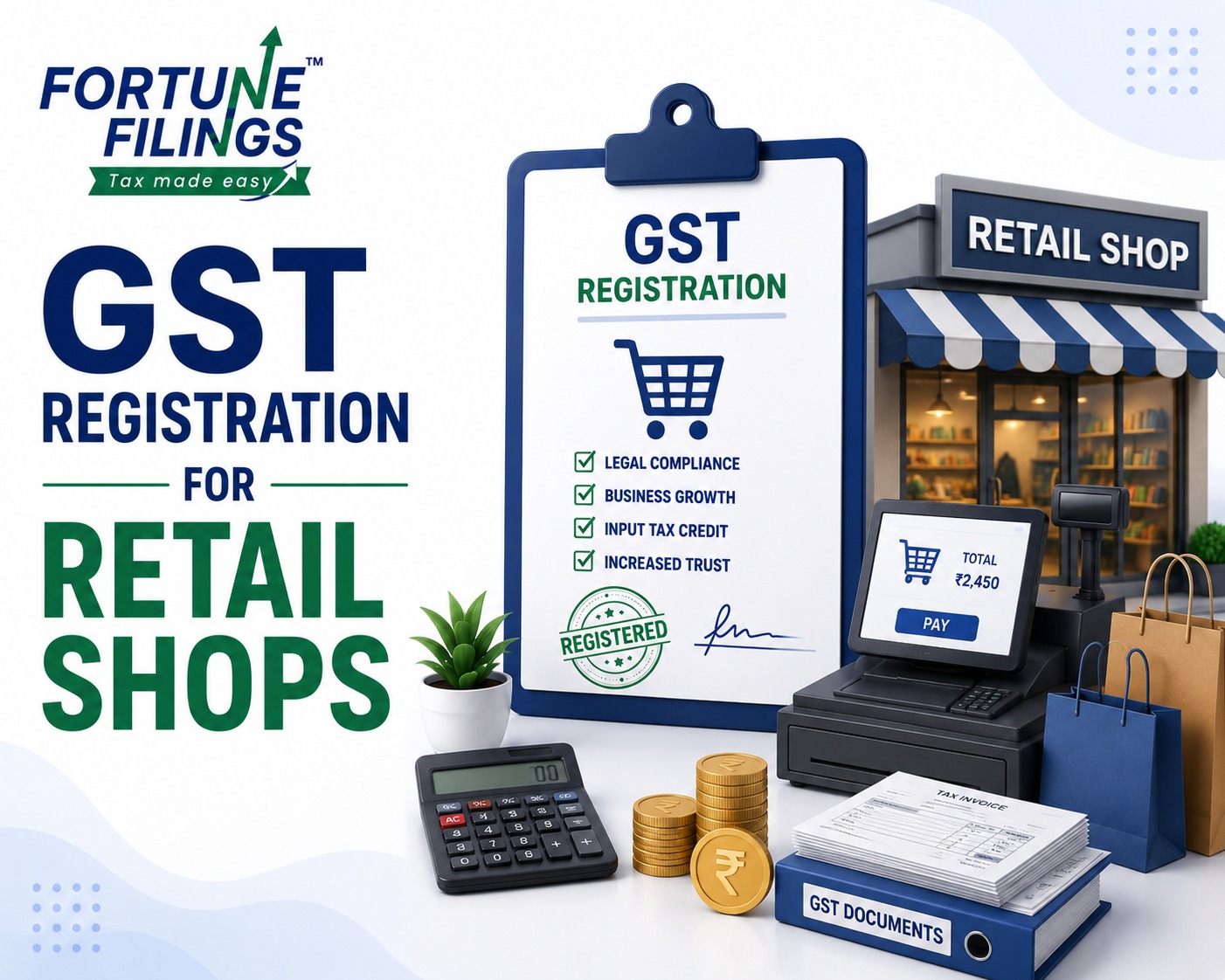
GST registration is an important step for retail businesses looking to operate in a compliant and professional manner.
Some of the key benefits include:
Legal authorization to collect GST
Improved business credibility
Eligibility to claim Input Tax Credit (ITC)
Easier supplier and distributor partnerships
Better opportunities to work with corporate customers
Simplified tax compliance
Support for long-term business growth
Retail businesses planning expansion often complete GST Registration in Chennai early to avoid future compliance issues.
Quick Overview
Particular | Details |
Registration Type | GST Registration |
Governing Law | Goods and Services Tax Act |
GSTIN Issued | Yes |
Online Registration | Yes |
Suitable For | Retail Shops, Grocery Stores, Clothing Shops, Electronics Stores, Medical Shops, Furniture Stores |
Who Should Apply for GST Registration?
GST registration may be applicable for various retail businesses, including:
Grocery Stores
Supermarkets
Clothing Shops
Footwear Stores
Mobile Shops
Electronics Stores
Furniture Stores
Hardware Shops
Medical Shops
Cosmetic Stores
Gift Shops
Stationery Stores
Jewellery Shops
Home Appliance Stores
Eligibility depends on turnover, business activities, and the applicable GST provisions.
Benefits of GST Registration for Retail Shops
Legal Business Operations
GST registration allows eligible retail businesses to collect GST and comply with tax regulations.
Input Tax Credit (ITC)
Registered businesses may claim eligible Input Tax Credit on business purchases, subject to GST rules.
This can help reduce the overall tax burden.
Improved Business Credibility
Many suppliers, distributors, and corporate buyers prefer dealing with GST-registered businesses.
Registration enhances trust and professionalism.
Easier Business Expansion
GST registration supports business growth by enabling retailers to expand operations across different markets while maintaining tax compliance.
Better Supplier Relationships
Wholesalers and manufacturers often prefer supplying goods to GST-registered businesses due to smoother tax credit flow.
Eligibility for GST Registration
GST registration may be mandatory or voluntary depending on applicable legal provisions.
Businesses may need to register if they:
Cross the prescribed turnover threshold.
Make interstate taxable supplies where applicable.
Sell through e-commerce platforms where GST registration is required.
Fall under categories requiring compulsory registration.
Even when not mandatory, many retail businesses opt for voluntary registration to improve credibility and claim Input Tax Credit.
Documents Required for GST Registration for Retail Shops
Documents Required for GST Registration for Retail Shops: Complete Checklist
Preparing all required documents before filing helps reduce delays during verification.
Identity Documents
PAN Card
Aadhaar Card
Passport (where applicable)
Business Documents
Business Registration Proof
Certificate of Incorporation / Partnership Deed / LLP Agreement (where applicable)
Address Proof
Electricity Bill
Rental Agreement (if applicable)
Property Tax Receipt
No Objection Certificate (where applicable)
Bank Details
Cancelled Cheque
Bank Statement
Additional Documents
Passport-size Photograph
Mobile Number
Email Address
Businesses planning GST Registration in Chennai should ensure that all information is accurate before submitting the application.
Step-by-Step GST Registration Process
Step 1 – Determine Eligibility
Review whether GST registration is mandatory or voluntary based on your business activities and applicable GST provisions.
Step 2 – Collect Required Documents
Prepare identity proof, address proof, business documents, and bank account details.
Step 3 – Complete the Online Application
Submit the GST registration application through the prescribed online process.
Step 4 – Verification
The GST authorities verify the submitted information and supporting documents.
Step 5 – GSTIN Allotment
Upon successful verification, the business receives a GST Identification Number (GSTIN) and GST Registration Certificate.
For a detailed explanation of the registration procedure, you may also find How to Apply for GST Registration Online? helpful.
Common Mistakes to Avoid
Retail business owners should avoid:
Entering incorrect PAN details.
Uploading incomplete address proof.
Providing incorrect business information.
Using mismatched bank account details.
Delaying GST registration after becoming eligible.
Accurate documentation helps reduce the possibility of application rejection. Businesses can also refer to GST Registration Rejection Reasons to understand common filing mistakes and how to avoid them.
Compliance After GST Registration
After obtaining GST registration, retail businesses should continue fulfilling their GST obligations by:
Issuing GST-compliant invoices.
Filing GST returns within the prescribed due dates.
Maintaining proper books of accounts.
Paying GST on time.
Updating registration details whenever required.
Timely compliance helps businesses avoid penalties and maintain a good compliance record.
Why Retail Shops in Chennai Choose GST Registration
Retail businesses applying for GST Registration in Chennai often choose to register because it strengthens business credibility and supports long-term growth.
Major advantages include:
Professional business image
Better supplier relationships
Input Tax Credit benefits
Easier business expansion
Compliance with GST regulations
Improved customer confidence
Whether you operate a small neighbourhood shop or a multi-location retail business, GST registration helps establish a compliant and trustworthy business.
Conclusion
GST Registration for Retail Shops is an important step for businesses looking to operate legally, improve credibility, and manage tax compliance efficiently. In addition to enabling the collection of GST and the issuance of tax invoices, registration allows eligible businesses to claim Input Tax Credit and build stronger relationships with suppliers, distributors, and corporate customers.
For retail businesses planning GST Registration in Chennai, understanding the registration requirements, preparing accurate documentation, and complying with ongoing GST obligations can help ensure smooth business operations. Whether you run a grocery store, clothing shop, electronics outlet, pharmacy, or any other retail business, GST registration provides a strong foundation for sustainable growth and long-term success.