Introduction
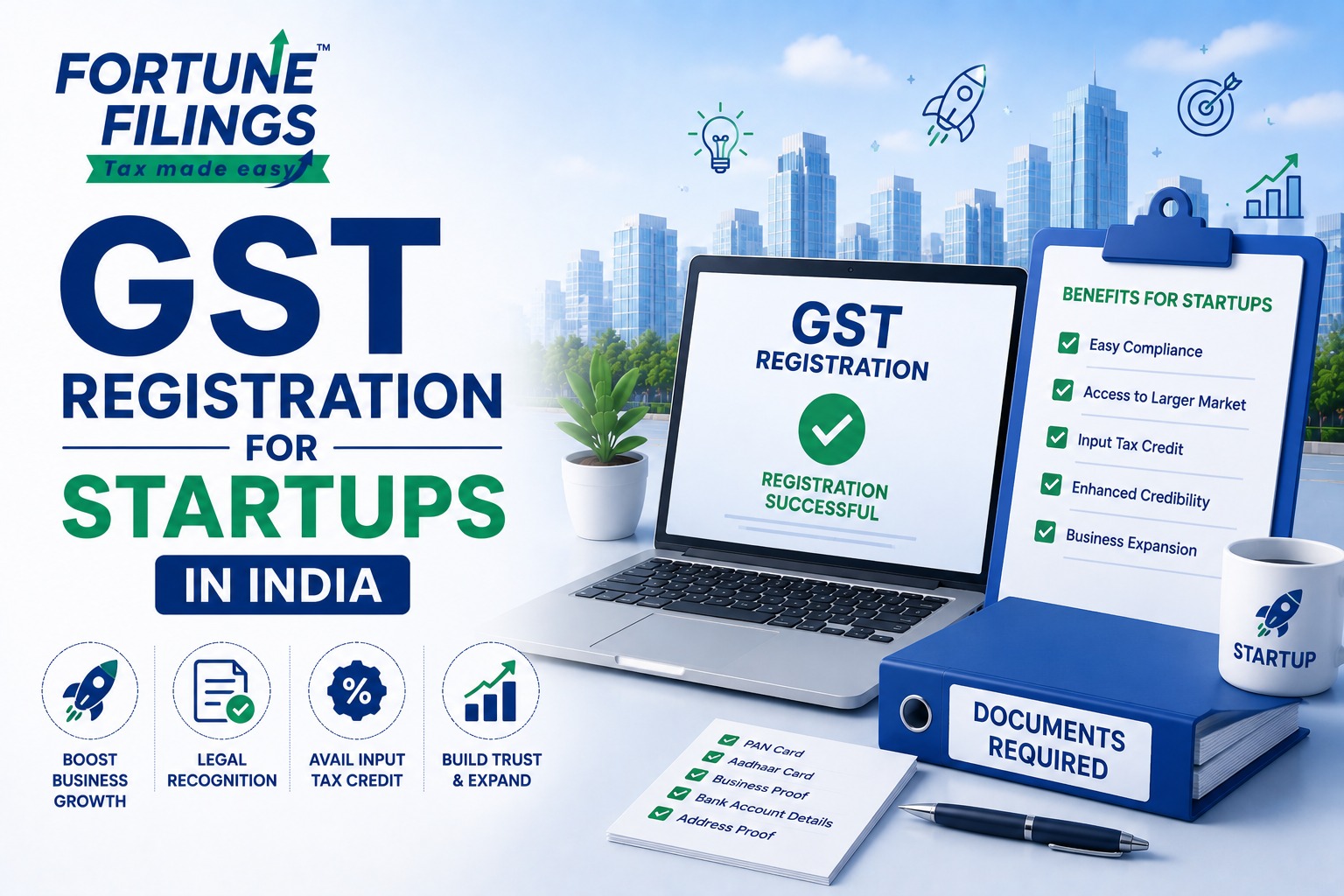
Understanding GST registration for startups in India is essential for entrepreneurs planning to build a legally compliant and scalable business. Whether you are launching a tech startup, agency, consultancy, SaaS platform, e-commerce business, or service company, GST registration helps improve credibility, simplify taxation, and support business growth.
Many founders assume startup GST registration becomes necessary only after reaching high turnover. However, depending on turnover limits, interstate transactions, business type, or e-commerce activity, startups may need GST registration much earlier. Even startups below threshold limits often register voluntarily to claim tax benefits, issue GST invoices, and work with larger corporate clients. GST registration also helps startups claim Input Tax Credit (ITC), improve financial efficiency, and operate professionally.
For startups planning growth and long-term compliance, understanding GST registration for startups in India helps avoid penalties, operational issues, and registration delays.
Are You Running a Startup Without GST Registration?
Many startups face problems such as:
- Difficulty working with corporate clients
- Inability to claim Input Tax Credit (ITC)
- Restrictions on interstate business
- Challenges selling on e-commerce platforms
- Tax compliance confusion
Registering under GST early can help startups avoid compliance risks and operate professionally.
Quick Summary – GST Registration for Startups in India
- Helps startups operate legally
- Enables Input Tax Credit (ITC)
- Improves startup credibility
- Supports interstate business
- Required for many e-commerce sellers
- Simplifies tax compliance and invoicing
What is GST Registration?
GST registration is the process of registering a startup or business under the Goods and Services Tax (GST) system.
After approval, businesses receive a GSTIN (Goods and Services Tax Identification Number) which allows them to:
- Collect GST legally
- File GST returns
- Claim Input Tax Credit (ITC)
- Issue GST invoices
- Expand business operations across India
Startups learning the GST Registration Process in India often understand that proper registration helps improve compliance and business credibility.
Why is GST Registration Important for Startups?
Startup founders often wonder whether GST registration is necessary in the early stage.
For many businesses, startup GST registration helps:
- Build business credibility
- Work with B2B clients
- Improve tax efficiency
- Claim Input Tax Credit
- Expand operations confidently
Many growing startups voluntarily register even before reaching mandatory turnover limits to improve business readiness and scale smoothly.
Who Should Apply for GST Registration?
Startups generally require GST registration under certain conditions.
1. Turnover-Based Registration
GST registration becomes mandatory after crossing annual turnover thresholds:
|
Business Type |
Threshold Limit |
|
Service-Based Startups |
₹20 Lakhs |
|
Goods-Based Startups |
₹40 Lakhs |
|
Special Category States |
₹10–20 Lakhs |
Threshold rules vary depending on business activity and state category.
2. Mandatory GST Registration (Regardless of Turnover)
Some startups must register irrespective of turnover.
This includes:
- E-commerce sellers
- Interstate suppliers in certain cases
- Businesses requiring GST invoices
- Startups serving enterprise clients
Many founders planning online selling choose GST registration early to support smoother operations and partnerships.
3. Voluntary GST Registration
Even when not mandatory, startups often voluntarily register for GST because it helps:
- Claim Input Tax Credit
- Improve startup credibility
- Work with larger companies
- Build professional invoicing systems
Voluntary registration often helps startups scale faster and appear more investment-ready.
Benefits of GST Registration for Startups
1. Input Tax Credit (ITC)
Registered startups can claim tax paid on purchases and business expenses.
This helps reduce:
- Operational expenses
- Tax burden
- Overall business cost
Input Tax Credit improves working capital and tax efficiency.
2. Better Business Credibility
GST registration improves trust among:
- Clients
- Vendors
- Investors
- Corporate partners
B2B companies often prefer working with GST-registered startups.
3. Easier Interstate Business
GST helps startups sell products or services across India through a unified tax structure.
This simplifies business expansion and reduces tax complexity.
4. E-Commerce Business Eligibility
Many marketplaces require GST registration.
This is useful for startups selling through:
- Online marketplaces
- D2C business models
- Digital commerce channels
GST registration improves startup scalability.
5. Better Startup Growth Opportunities
Registered startups often find it easier to:
- Raise funding
- Work with enterprise clients
- Maintain financial records
- Scale business operations
Compliance readiness improves long-term business growth.
GST Registration Process for Startups in India
The startup GST registration process generally includes:
- Prepare business documents
- Complete online GST application
- Verify Aadhaar and business information
- Upload required documents
- Submit application
- Receive GSTIN after approval
The process is fully online and usually takes around 3–7 working days when documents are accurate.
Startups researching How to Apply for GST Registration Online usually complete registration faster when documents are prepared beforehand.
Documents Required for GST Registration
Startups generally need:
- PAN Card
- Aadhaar Card
- Passport-size photograph
- Business registration proof
- Address proof
- Office address proof
- Bank account details
- Mobile number & email ID
Preparing the Documents Required for GST Registration checklist early helps avoid approval delays.
Why Does GST Registration Matters for Startups in Chennai?
Founders seeking GST registration in Chennai often register early to:
- Work with corporate clients
- Improve startup credibility
- Sell products across India
- Claim tax benefits
- Ensure legal tax compliance
Startups planning long-term expansion usually benefit from structured GST compliance.
Common Mistakes Startups Make During GST Registration
Many startups face delays because of:
- Incorrect PAN details
- Missing business proof
- Wrong business category selection
- Address mismatch issues
- Invalid document uploads
Accurate filing improves approval speed and reduces rejection risk.
Conclusion
Understanding GST registration for startups in India helps founders build a legally compliant and scalable business structure from the beginning. From claiming Input Tax Credit and improving credibility to enabling interstate business and smoother compliance, GST registration offers several advantages for startups.
Startups planning growth and professional business operations often choose GST registration early to avoid compliance issues and strengthen operational efficiency. Businesses seeking GST registration in Chennai commonly register in the early stage to support smoother scaling, tax compliance, and long-term startup growth.