
LLP & Property Ownership in India Legal Rules Made Simple (2026 Guide)
Introduction
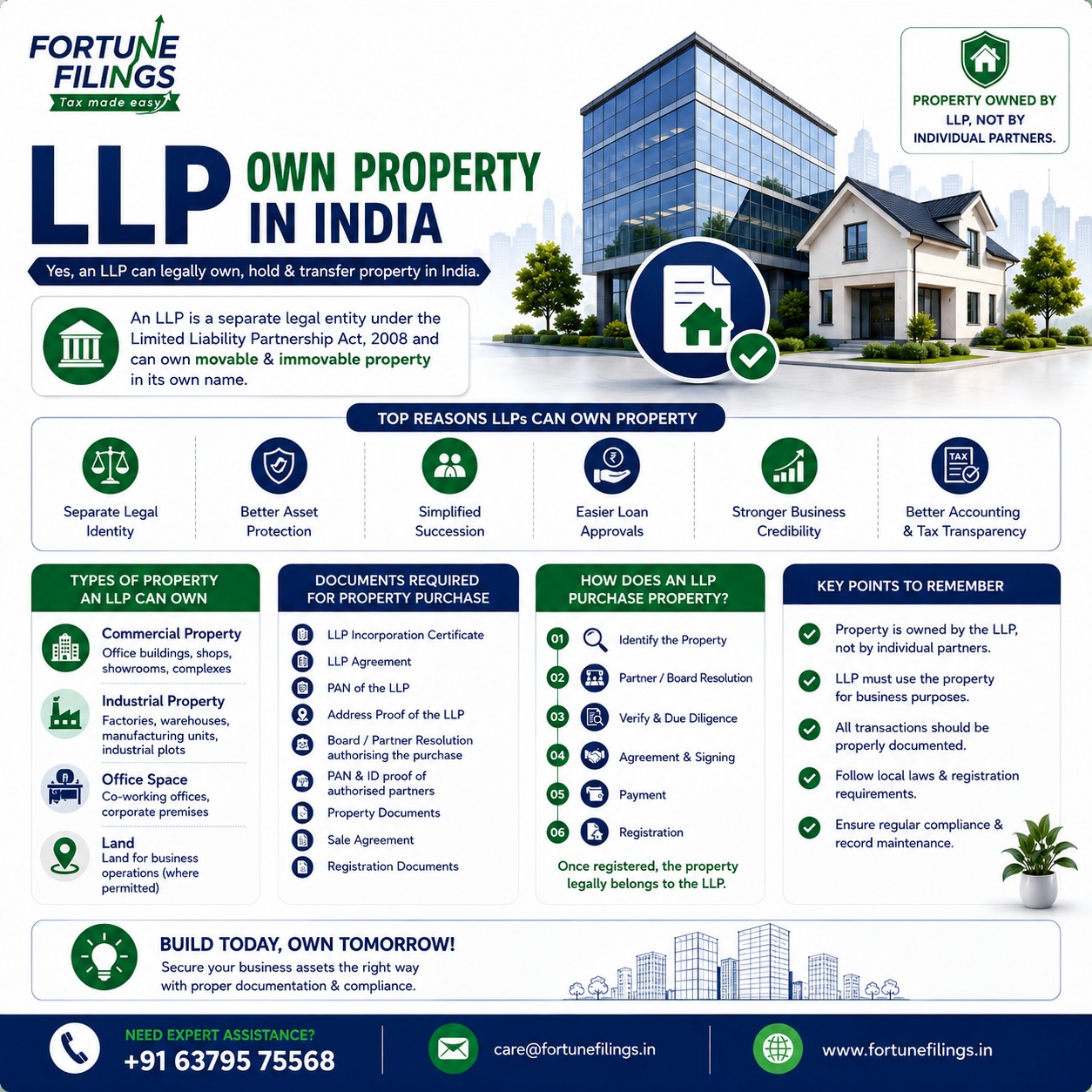
When entrepreneurs choose a Limited Liability Partnership (LLP) as their business structure, they often focus on benefits such as limited liability, operational flexibility, and simplified compliance. However, one practical question frequently arises as the business grows: LLP & Property Ownership in India Legal Rules Made Simple The answer is yes. An LLP is recognised as a separate legal entity under the Limited Liability Partnership Act, 2008, which means it can legally acquire, own, hold, lease, and transfer property in its own name.
Property ownership is an important consideration for many businesses. Whether an LLP plans to purchase office premises, a warehouse, a manufacturing unit, commercial space, or land for future expansion, understanding the legal framework helps ensure the transaction is completed correctly. Unlike a traditional partnership firm, where property ownership may create complications among partners, an LLP enjoys a distinct legal identity that separates business assets from the personal assets of its partners.
Businesses considering LLP Registration in Chennai often choose this structure because it offers both legal protection and the ability to own business assets independently. Understanding the rules governing property ownership also helps partners make informed decisions about investment, financing, and long-term business planning.
Understanding the Legal Status of an LLP
An LLP is recognised as a body corporate under the Limited Liability Partnership Act, 2008. It has a legal identity that is separate from its partners.
This means an LLP can:
Own movable property
Own immovable property
Enter into contracts
Open bank accounts
Borrow funds
Initiate or defend legal proceedings
Continue operations even if partners change
Because of this separate legal identity, any property purchased by the LLP belongs to the LLP itself rather than to the individual partners.
This distinction is one of the major reasons entrepreneurs choose LLP Registration in Chennai when establishing a professional or growing business.
Can an LLP Purchase Property?
Yes.
An LLP can legally purchase different types of property depending on its business requirements.
These may include:
Office buildings
Commercial shops
Industrial land
Warehouses
Manufacturing units
Retail premises
Office spaces
Business parks
Storage facilities
The purchase is made in the name of the LLP, not in the personal names of its partners.
Why Businesses Purchase Property Through an LLP
Many businesses prefer purchasing property through the LLP because it offers several operational and legal advantages.
Some of the major benefits include:
Ownership under the business name
Better asset protection
Simplified succession
Improved financial transparency
Easier loan applications
Stronger business credibility
Better accounting and taxation records
Owning property through an LLP also separates business investments from the personal assets of the partners.
Types of Property an LLP Can Own
An LLP is generally permitted to own various categories of property depending on applicable laws and the intended business activity.
These may include:
Commercial Property
Office buildings, retail shops, showrooms, and commercial complexes.
Industrial Property
Factories, warehouses, manufacturing facilities, and industrial plots.
Office Space
Co-working offices, leased offices, and purchased corporate premises.
Land
Land may be purchased where permitted under applicable laws and regulations.
The nature of the property should align with the LLP's business objectives and comply with local land and registration laws.
Documents Required for Property Purchase
Before purchasing property, the LLP should ensure that its legal documents are complete and up to date.
Commonly required documents include:
LLP Incorporation Certificate
LLP Agreement
PAN of the LLP
Address Proof of the LLP
Board or Partner Resolution authorising the purchase
PAN and identity proof of authorised partners
Property documents
Sale agreement
Registration documents
Keeping these documents organised helps ensure a smooth property transaction.
Businesses that are still in the incorporation stage may also find LLP Registration in Chennai guides useful for understanding the documents required before acquiring business assets.
How Does an LLP Purchase Property?
The process generally follows several structured steps.
Step 1 – Identify the Property
Select a suitable commercial or industrial property based on the LLP's business requirements.
Step 2 – Verify Property Documents
Conduct proper legal verification to ensure:
Clear ownership
Valid title
No pending disputes
Required approvals
Proper land records
Legal due diligence is an essential part of every property transaction.
Step 3 – Obtain Partner Approval
Partners should authorise the purchase according to the LLP Agreement.
Many LLP Agreements specify the approval process for significant financial decisions such as purchasing immovable property.
If the LLP Agreement requires modification before major business decisions, partners may also refer to LLP Agreement: Format, Mandatory Clauses, Stamp Duty & Filing Guide (2026) to understand how the agreement governs management decisions.
Step 4 – Execute the Sale Agreement
The seller and the LLP execute the sale agreement after completing due diligence.
Step 5 – Register the Property
The property is registered in the name of the LLP with the appropriate registration authority.
After registration, the property legally becomes an asset of the LLP.
Who Owns the Property?
One of the most common misconceptions is that partners individually own the property purchased by the LLP.
In reality:
The LLP owns the property.
Partners do not personally own the business asset merely because they are partners.
Ownership remains with the LLP unless the property is legally transferred.
This legal separation protects business assets from changes in partnership.
Can Partners Use LLP Property?
Partners may use LLP property only for authorised business purposes and in accordance with the LLP Agreement.
Business assets should generally not be treated as personal assets of individual partners.
Maintaining this distinction supports proper accounting and legal compliance.
Can an LLP Sell Property?
Yes.
Since the LLP is the legal owner, it may also sell or transfer property.
Before selling business property, the LLP should:
Obtain necessary partner approvals
Complete legal documentation
Execute sale agreements
Comply with registration requirements
Record the transaction in its books of accounts
Proper documentation helps avoid future legal disputes.
Can an LLP Lease Property?
Yes.
An LLP may:
Lease office space
Lease warehouses
Lease commercial buildings
Lease industrial premises
Similarly, an LLP that owns property may also lease it to another business, subject to applicable laws and contractual terms.
Property Ownership and Business Loans
Owning commercial property often strengthens an LLP's financial profile.
Business-owned property may help during:
Loan applications
Business expansion
Working capital financing
Asset-backed lending
Banks and financial institutions generally evaluate ownership documents along with financial records before processing loan applications.
Entrepreneurs interested in financing may also find LLP & Property Ownership in India Legal Rules Made Simple helpful for understanding how LLPs can improve their financing opportunities.
Accounting Treatment of LLP Property
Property owned by the LLP should be properly reflected in the books of accounts.
Businesses should maintain records relating to:
Purchase value
Registration expenses
Improvements
Depreciation (where applicable)
Sale proceeds
Maintaining accurate accounting records supports annual compliance and financial reporting.
Common Mistakes to Avoid
Businesses should avoid the following mistakes while purchasing property through an LLP:
Registering the property in a partner's personal name instead of the LLP.
Failing to verify ownership documents.
Ignoring legal due diligence.
Not obtaining partner approval.
Maintaining incomplete accounting records.
Mixing personal and business property transactions.
Avoiding these issues helps reduce legal and financial risks.
Compliance After Purchasing Property
After acquiring property, LLPs should continue maintaining proper compliance by:
Updating accounting records
Preserving original property documents
Recording assets in financial statements
Maintaining statutory books
Completing annual filings on time
Businesses should also continue fulfilling their annual compliance obligations. For a complete overview, you may refer to LLP Annual Compliance Checklist, which explains the important post-registration responsibilities of an LLP.
Why LLPs Prefer Owning Business Property
Many growing businesses eventually invest in commercial property because it supports long-term stability and expansion.
Owning property through an LLP offers several strategic advantages:
Long-term asset creation
Better operational control
Reduced dependency on rented premises
Enhanced business credibility
Stronger financial position
Easier expansion planning
Whether the LLP operates a consultancy, manufacturing unit, IT company, logistics business, or trading enterprise, owning business property can become an important milestone in its growth journey.
Importance of Professional Legal Guidance
Purchasing property involves significant financial and legal commitments. Businesses should ensure that property verification, registration, accounting, and compliance are completed correctly.
Professional guidance helps LLPs:
Verify legal ownership
Review property documents
Maintain statutory records
Complete registrations
Ensure proper accounting
Avoid future legal disputes
A properly documented transaction protects both the LLP and its partners.
Conclusion
The answer to LLP & Property Ownership in India Legal Rules Made Simple is a clear yes. As a separate legal entity, an LLP can legally purchase, own, lease, and transfer property in its own name. This legal recognition provides businesses with greater asset protection, operational flexibility, and financial stability while separating business assets from the personal assets of individual partners.
For entrepreneurs considering LLP Registration in Chennai, understanding property ownership rules is an important part of long-term business planning. Whether purchasing office premises, warehouses, commercial buildings, or industrial facilities, maintaining proper documentation, completing legal verification, and complying with statutory requirements help ensure that every property transaction is secure and legally compliant. As businesses grow, owning property through an LLP can become a valuable asset that supports expansion, strengthens credibility, and contributes to sustainable business success.