Introduction
One of the most common questions entrepreneurs ask before starting a business is: What is the minimum capital required for Private Limited Company registration in Chennai?
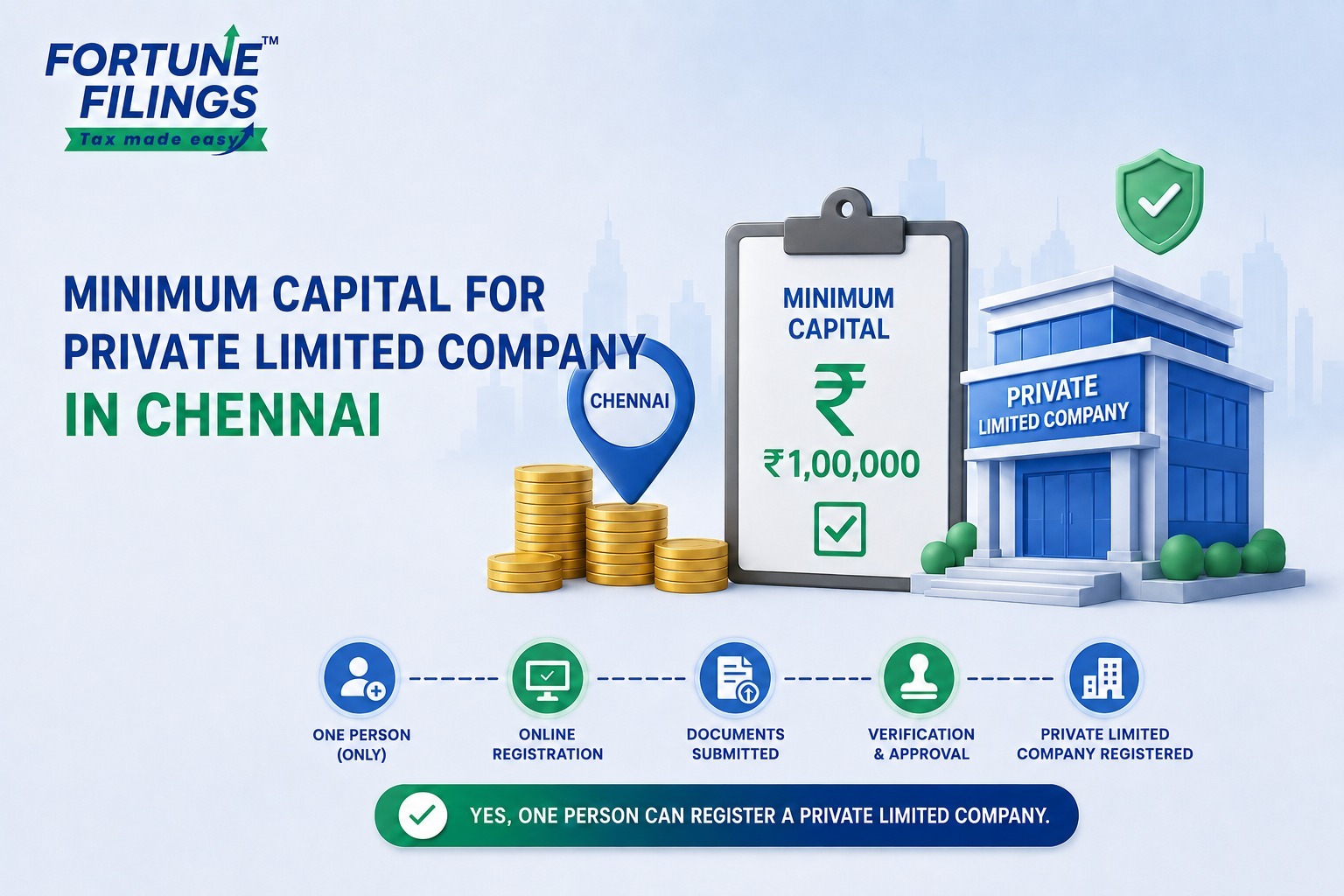
The good news is that under the current provisions of the Companies Act, 2013, there is no minimum paid-up capital requirement for incorporating a Private Limited Company in India. The earlier requirement of ₹1 lakh minimum paid-up capital was removed through the Companies (Amendment) Act, 2015.
This means entrepreneurs planning Private Limited Company Registration in Chennai can start their business with any amount of capital that aligns with their operational needs and growth plans. However, understanding the difference between authorized capital and paid-up capital is essential for making informed decisions during incorporation.
Unsure How Much Capital You Should Start With?
Many founders assume they must invest large amounts to register a company.
In reality, your ideal capital depends on:
- Business model
- Industry type
- Initial operating expenses
- Funding requirements
- Future expansion plans
Choosing the right capital structure can help reduce registration costs while supporting business growth.
Quick Summary – Capital Requirements
- No minimum paid-up capital is required.
- You can incorporate a company with any amount of capital.
- Authorized capital determines certain government fees.
- Most startups choose ₹1 lakh as authorized capital.
- Paid-up capital can be lower than authorized capital.
- Capital can be increased later as the business grows.
Is There a Minimum Paid-Up Capital Requirement?
No.
There is currently no minimum paid-up capital requirement for Private Limited Companies in India. You can technically register a company with a paid-up capital of as little as ₹1.
This regulatory change was introduced to encourage entrepreneurship and make company incorporation more accessible for startups and small businesses.
Understanding Authorized Capital vs Paid-Up Capital
Many entrepreneurs confuse these two concepts.
|
Particulars |
Authorized Capital |
Paid-Up Capital |
|
Meaning |
Maximum share capital a company can issue |
Actual amount received from shareholders |
|
Purpose |
Defines fundraising capacity |
Represents invested capital |
|
Mentioned In |
Memorandum of Association (MOA) |
Company financial records |
|
Impact on Fees |
Affects government fees and stamp duty |
Does not directly impact incorporation fees |
|
Can It Be Increased? |
Yes |
Yes |
Understanding this distinction helps businesses structure their capital efficiently.
How Much Authorized Capital Should You Choose?
Although there is no legal minimum, many startups choose an authorized capital of ₹1 lakh during incorporation.
This amount is often preferred because it:
- Keeps government fees manageable
- Provides flexibility for future fundraising
- Supports initial business operations
- Creates a professional capital structure
Businesses can increase authorized capital later as they expand.
Does Higher Capital Increase Registration Costs?
Yes.
Government fees and stamp duty may vary depending on the authorized capital declared during incorporation. Higher authorized capital generally results in higher registration costs.
Therefore, entrepreneurs should choose an amount that reflects their short-term and medium-term business needs.
How Much Capital Should Startups in Chennai Consider?
The ideal capital amount depends on your business activities.
Here are some practical examples:
|
Business Type |
Suggested Initial Capital |
|
Freelancers and Consultants |
₹10,000 – ₹50,000 |
|
Digital Agencies |
₹50,000 – ₹1 Lakh |
|
IT and SaaS Startups |
₹1 Lakh – ₹5 Lakhs |
|
E-commerce Businesses |
₹1 Lakh – ₹10 Lakhs |
|
Manufacturing Businesses |
₹5 Lakhs and above |
These figures are indicative and should align with your operational requirements.
Can You Increase Capital After Registration?
Yes.
A Private Limited Company can increase its authorized and paid-up capital after incorporation by following the prescribed legal procedures.
Businesses typically increase capital when they:
- Raise investment
- Add new shareholders
- Expand operations
- Launch new products or services
This flexibility makes startup company registration Chennai attractive for growth-focused entrepreneurs.
Factors to Consider Before Deciding Capital
Before finalizing your capital structure, consider:
- Initial business expenses
- Office setup costs
- Employee salaries
- Marketing budget
- Technology investments
- Future funding plans
Choosing an appropriate capital structure can help optimize registration costs and simplify future fundraising.
Documents Required for Company Registration
Regardless of the capital amount, you will need:
- PAN Card of directors
- Aadhaar Card
- Passport-size photographs
- Address proof
- Office address proof
- Rental agreement (if applicable)
- Digital Signature Certificate (DSC)
Proper documentation ensures faster incorporation.
You can also explore our guide on Documents Required for Private Limited Company Registration for a complete checklist.
Common Myths About Company Capital
Myth 1: ₹1 Lakh Must Be Deposited in a Bank Account
False.
There is no mandatory requirement to deposit ₹1 lakh before incorporation.
Myth 2: Higher Capital Improves Approval Chances
False.
Company approval depends on accurate documentation and compliance, not capital amount.
Myth 3: Capital Cannot Be Changed Later
False.
Authorized and paid-up capital can be increased whenever required.
Conclusion
If you are planning Private Limited Company Registration in Chennai, understanding the capital requirements can help you make informed decisions and avoid unnecessary expenses. The biggest advantage for startups is that there is no minimum paid-up capital requirement, allowing entrepreneurs to begin with an amount that suits their business goals.
While many businesses choose an authorized capital of ₹1 lakh for practical reasons, the ideal amount depends on your industry, operational needs, and future growth plans. By selecting the right capital structure from the beginning, entrepreneurs can establish a strong foundation for sustainable business growth.