Introduction
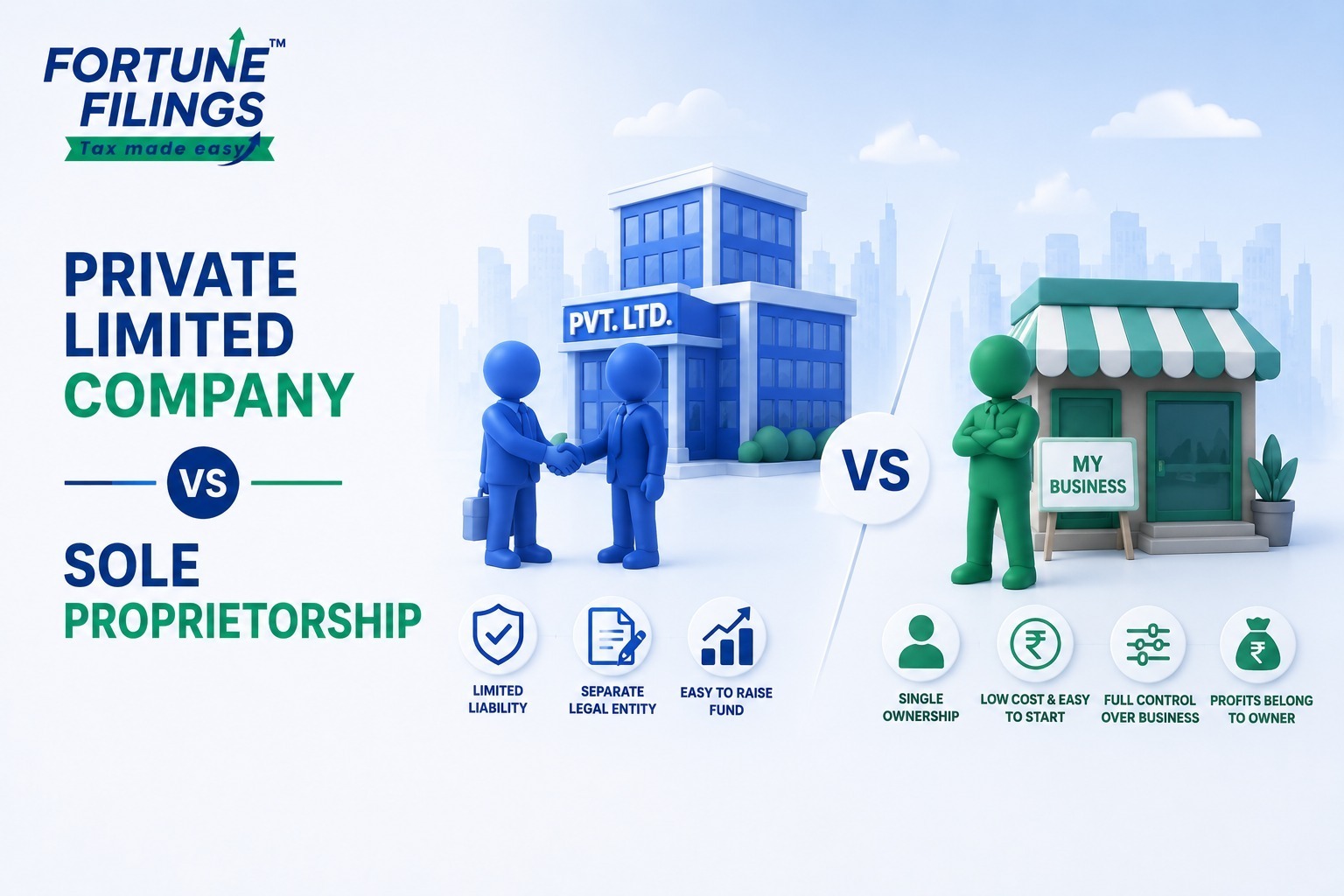
Understanding Private Limited Company vs Sole Proprietorship is important for entrepreneurs planning to choose the right legal structure for their business. Whether you are starting a startup, consultancy, agency, retail business, or service company, selecting the right business model affects taxation, legal protection, credibility, scalability, and long-term growth.
Many business owners struggle to decide between a Sole Proprietorship and a Private Limited Company because both structures offer different advantages. While a Sole Proprietorship is easier to start and manage, a Private Limited Company offers limited liability, legal identity, investor readiness, and better scalability. Choosing the wrong structure can lead to compliance issues, financial risk, or future operational limitations.
Businesses planning private limited company registration in Chennai often compare both models before deciding which structure better supports future growth and legal protection.
Are You Choosing the Wrong Business Structure?
Many entrepreneurs face challenges such as:
- Limited legal protection
- Tax confusion
- Difficulty raising funds
- Poor business credibility
- Expansion limitations
Understanding the differences early helps businesses avoid restructuring later.
Quick Summary – Private Limited Company vs Sole Proprietorship
- Sole Proprietorship is easier to start
- Private Limited Company offers legal protection
- Pvt Ltd improves credibility and scalability
- Sole Proprietorship suits small local businesses
- Pvt Ltd is better for startups and growth-focused businesses
- Liability protection differs significantly
What is a Sole Proprietorship?
A Sole Proprietorship is the simplest business structure owned and managed by one individual.
Features include:
- Single ownership
- Easy setup process
- Minimal compliance requirements
- Complete control by owner
In this structure, the owner and business are legally treated as the same entity.
Small businesses and local service providers often begin operations as proprietorships due to low setup complexity.
What is a Private Limited Company?
A Private Limited Company is a legally registered business entity governed under the Companies Act, 2013.
It provides:
- Separate legal identity
- Limited liability protection
- Better credibility
- Ownership through shares
- Growth and funding opportunities
Businesses exploring Benefits of Private Limited Company Registration often choose this model for structured business expansion and investor confidence.
Why Choosing the Right Business Structure Matters?
Your business structure affects:
- Legal liability
- Business taxation
- Compliance burden
- Investor opportunities
- Scalability potential
Entrepreneurs researching Private Limited Company Registration Process often compare structures before incorporation.
Private Limited Company vs Sole Proprietorship – Key Differences
|
Feature |
Sole Proprietorship |
Private Limited Company |
|
Ownership |
Single owner |
Shareholders & directors |
|
Legal Identity |
No separate legal identity |
Separate legal entity |
|
Liability |
Unlimited liability |
Limited liability |
|
Registration |
Easy |
Formal registration required |
|
Compliance |
Lower |
Higher |
|
Funding Opportunities |
Limited |
Better |
|
Credibility |
Moderate |
Higher |
|
Business Continuity |
Owner dependent |
Better continuity |
This comparison helps entrepreneurs understand the practical difference between both business structures.
1. Legal Identity
Sole Proprietorship
A Sole Proprietorship does not have a separate legal identity.
This means:
- Owner and business are treated as one
- Business liabilities directly affect owner
Private Limited Company
A Private Limited Company has a separate legal identity.
Benefits include:
- Legal business recognition
- Separate entity status
- Better protection for owners
Businesses planning private limited company registration in Chennai often prefer this structure for long-term security.
2. Liability Protection
Sole Proprietorship
The owner has unlimited liability.
This means:
- Personal assets may be at risk
- Business debt affects owner directly
Private Limited Company
Private Limited Companies provide limited liability protection.
This means:
- Personal assets remain protected
- Financial liability becomes limited to ownership contribution
For startups and growing businesses, this becomes a major advantage.
3. Registration Process
Sole Proprietorship
Registration is simple and may involve:
- GST registration
- Shop license (if applicable)
- Business bank account
Private Limited Company
Company registration involves:
- Digital Signature Certificate (DSC)
- Director Identification Number (DIN)
- Name approval
- MCA incorporation filing
Businesses researching Documents Required for Private Limited Company Registration usually prepare documentation early for smoother approval.
4. Funding and Investment
Sole Proprietorship
Funding opportunities are usually limited.
Businesses often depend on:
- Personal savings
- Loans
- Family funding
Private Limited Company
Private Limited Companies are more investor-friendly.
Benefits include:
- Shareholding structure
- Investor participation
- Better startup funding opportunities
This is one major reason startups prefer Private Limited Company registration.
5. Compliance Requirements
Sole Proprietorship
Compliance burden is lower.
Usually includes:
- Basic tax filing
- GST filing (if applicable)
Private Limited Company
Private Limited Companies require:
- Annual filing
- ROC compliance
- Financial reporting
- Corporate governance compliance
Businesses planning long-term growth usually consider compliance worthwhile.
6. Business Credibility
Sole Proprietorship
Suitable for:
- Local shops
- Small service businesses
- Individual freelancers
However, credibility may be lower when dealing with large enterprises.
Private Limited Company
Private Limited Companies often appear:
- More professional
- More trustworthy
- More scalable
Many B2B clients and investors prefer registered companies.
Who Should Choose Sole Proprietorship?
Sole Proprietorship suits:
- Freelancers
- Small local businesses
- Individual service providers
- Low-risk operations
Businesses with limited growth plans often prefer this structure.
Who Should Choose a Private Limited Company?
Private Limited Company is ideal for:
- Startups
- Agencies
- IT companies
- Scalable businesses
- Investor-focused businesses
Businesses planning startup company registration Chennai often prefer Pvt Ltd structure for growth and credibility.
Which is Better: Private Limited Company or Sole Proprietorship?
The answer depends on business goals.
Choose Sole Proprietorship if:
- You want low compliance
- You operate individually
- You have low legal risk
Choose Private Limited Company if:
- You plan growth
- You need liability protection
- You want investor opportunities
- You want stronger credibility
Why Businesses in Chennai Prefer Private Limited Company Registration?
Businesses planning private limited company registration in Chennai often choose this model because of:
- Better credibility
- Startup scalability
- Investor readiness
- Legal protection
- Structured growth opportunities
Growing businesses generally shift from proprietorship to Private Limited Company as operations expand.
Conclusion
Understanding Private Limited Company vs Sole Proprietorship helps entrepreneurs choose a structure that aligns with business goals, compliance preference, and growth plans. While Sole Proprietorship offers simplicity and lower compliance, Private Limited Companies provide legal identity, limited liability protection, investor readiness, and stronger credibility.
Businesses planning private limited company registration in Chennai often choose Private Limited Company structure for long-term growth, legal protection, and scalability. Evaluating funding goals, risk level, and operational requirements helps entrepreneurs select the right business structure confidently.