Introduction
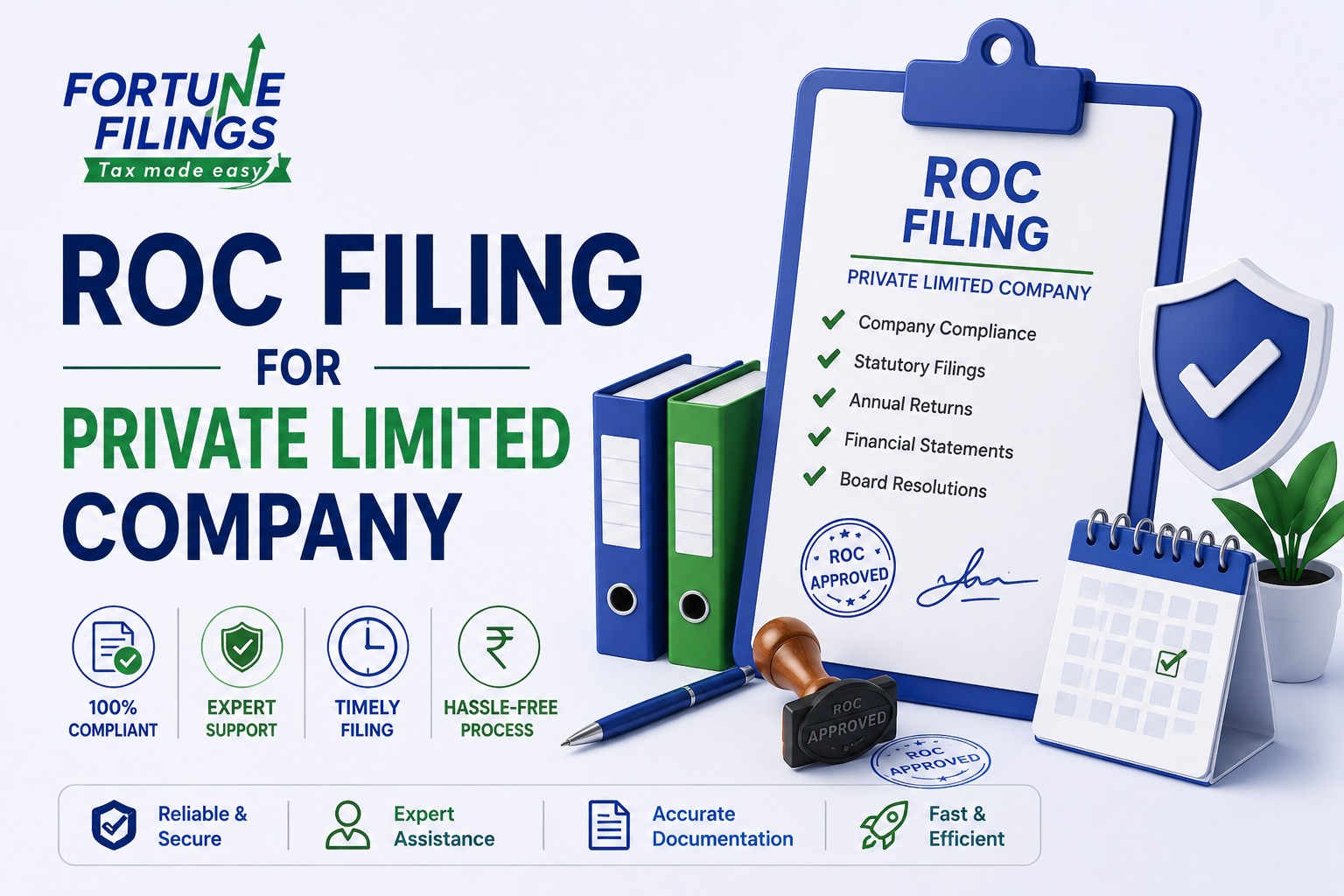
ROC Filing for Private Limited Company is one of the most important annual compliance requirements under the Companies Act, 2013. Every Private Limited Company registered in India must file specific forms and financial statements with the Registrar of Companies (ROC), regardless of turnover, business activity, or profitability.
Many business owners assume ROC filing is necessary only when the company generates revenue. However, even dormant companies and startups that have not commenced operations must comply with ROC filing requirements. Failure to file ROC returns on time can result in heavy penalties, legal consequences, and disqualification of directors.
Businesses that have completed Private Limited Company Registration in Chennai should understand their annual ROC compliance obligations to maintain active company status and avoid regulatory issues. Proper ROC filing ensures transparency, legal compliance, and smooth business operations.
Is Your Company Missing Mandatory ROC Compliance?
Many companies unknowingly face penalties because they:
- Miss annual filing deadlines
- Ignore MCA compliance requirements
- Fail to submit financial statements
- Delay annual return filing
- Assume inactive companies need no compliance
Even a newly incorporated company must comply with ROC filing obligations.
Quick Summary – ROC Filing for Private Limited Company
- Mandatory for all Private Limited Companies
- Required even for inactive companies
- Includes annual return filing
- Includes financial statement filing
- Non-compliance attracts penalties
- Maintains legal company status
What is ROC Filing?
ROC Filing refers to submitting company-related documents, financial statements, and annual returns to the Registrar of Companies (ROC) through the Ministry of Corporate Affairs (MCA) portal.
ROC filing helps the government maintain updated records regarding:
- Company ownership
- Directors
- Financial performance
- Registered office details
- Shareholding structure
Regular filing demonstrates that the company is legally compliant and actively maintaining statutory obligations.
Why is ROC Filing Important?
ROC filing serves several important purposes.
It helps:
- Maintain company compliance
- Avoid penalties
- Preserve company status
- Improve business credibility
- Facilitate funding and investment
Investors, banks, and government authorities often review ROC records before engaging with a company.
Is ROC Filing Mandatory for Every Private Limited Company?
Yes.
Every Private Limited Company registered under the Companies Act, 2013 must complete annual ROC filing.
This requirement applies to:
- Startups
- Small companies
- One Person Companies (as applicable)
- Dormant companies
- Non-operational companies
Even if there is:
- No turnover
- No business activity
- No profit
ROC compliance remains mandatory.
Major ROC Filing Requirements for Private Limited Companies
1. Filing Financial Statements
Companies must prepare and file financial statements annually.
These generally include:
- Balance Sheet
- Profit and Loss Account
- Auditor's Report
- Notes to Accounts
Financial statements provide an overview of company performance and financial position.
2. Filing Annual Return
Annual return filing contains important company information such as:
- Registered office details
- Shareholding structure
- Director information
- Share capital details
This filing ensures company records remain updated with ROC.
3. Conducting Annual General Meeting (AGM)
Most Private Limited Companies are required to hold an Annual General Meeting.
During the AGM:
- Financial statements are approved
- Company affairs are reviewed
- Shareholder decisions are recorded
AGM compliance is closely linked to ROC filing obligations.
Important ROC Forms for Private Limited Companies
|
ROC Form |
Purpose |
|
AOC-4 |
Filing Financial Statements |
|
MGT-7 / MGT-7A |
Filing Annual Return |
|
ADT-1 |
Auditor Appointment |
|
DIR-3 KYC |
Director KYC Compliance |
|
DPT-3 |
Return of Deposits (if applicable) |
The applicable forms may vary depending on company structure and compliance requirements.
ROC Filing Process for Private Limited Company
Step 1: Prepare Financial Statements
The company prepares:
- Balance Sheet
- Profit & Loss Account
- Financial Reports
These statements are reviewed and finalized.
Step 2: Conduct Board Meeting
Directors review:
- Financial statements
- Annual compliance requirements
- Filing approvals
Board resolutions may be passed where required.
Step 3: Conduct Annual General Meeting
Shareholders approve:
- Financial statements
- Auditor-related matters
- Other statutory requirements
Step 4: File ROC Forms
Relevant forms are uploaded through the MCA portal along with supporting documents.
Step 5: Complete Annual Compliance
Once forms are approved, annual ROC filing requirements are considered completed.
ROC Filing Due Dates
Although compliance timelines may change based on MCA notifications, companies generally follow annual filing schedules for:
- Financial Statements
- Annual Returns
- Director KYC
- Auditor-related filings
Companies should regularly monitor official MCA announcements for updated due dates.
Common Mistakes in ROC Filing
Many companies face compliance issues due to:
Missing Filing Deadlines
Late filing leads to additional fees and penalties.
Incorrect Financial Information
Errors in financial statements may create compliance complications.
Director KYC Non-Compliance
Failure to complete KYC requirements can deactivate DIN.
Ignoring Dormant Company Compliance
Even inactive companies must fulfill ROC obligations.
Incorrect Shareholding Details
Mismatched records may lead to filing issues.
Penalties for Non-Compliance
Failure to complete ROC filing can result in:
- Additional filing fees
- Monetary penalties
- Director disqualification
- Company compliance notices
- Legal complications
Regular compliance helps businesses avoid these risks.
Benefits of Timely ROC Filing
1. Maintains Legal Compliance
Regular filing keeps the company compliant with statutory requirements.
2. Improves Business Credibility
Timely compliance builds trust among:
- Investors
- Banks
- Vendors
- Clients
3. Supports Funding Opportunities
Investors often verify ROC compliance before investing.
Companies with proper compliance records appear more reliable.
Businesses exploring Why Investors Prefer Private Limited Companies often discover that compliance plays a major role in investor confidence.
4. Prevents Penalties
Filing on time helps companies avoid unnecessary financial penalties and notices.
5. Facilitates Business Expansion
A compliant company can:
- Raise funding
- Apply for loans
- Participate in tenders
- Expand operations
More efficiently than a non-compliant company.
ROC Filing Checklist for Private Limited Companies
Before filing, ensure:
✔ Financial statements are prepared
✔ Auditor appointment is completed
✔ Director KYC is updated
✔ Annual return information is verified
✔ Shareholding records are accurate
✔ Registered office details are updated
Following a compliance checklist helps prevent filing errors.
Why Startups Should Prioritize ROC Filing
Many startup founders focus only on business growth and funding.
However, ROC compliance is equally important because:
- Investors review compliance records
- Funding due diligence requires updated filings
- MCA penalties can increase significantly
- Non-compliance affects company reputation
Businesses completing startup company registration Chennai should establish annual compliance systems from the beginning.
Conclusion
ROC Filing for Private Limited Company is a mandatory annual compliance requirement that every registered company must fulfill. From filing financial statements and annual returns to maintaining updated company records, ROC compliance plays a vital role in preserving legal status and avoiding penalties.
Businesses that have completed Private Limited Company Registration in Chennai should prioritize timely ROC filing to maintain compliance, improve credibility, and support future growth opportunities. By establishing a structured compliance process and meeting filing obligations on time, companies can operate confidently while focusing on long-term business success.